Monday, November 29, 2010

angles, framing, and gaze

gaze: direct
framing: public
angles: low angle, frontal angle.

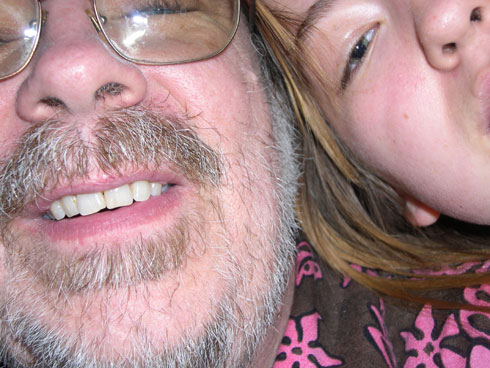
in this picture we can see that the represented participant gaze directly at us from above. this picture is showing her power, and authority, and also how we feel some sort of involvement with this picture due to the frontal angle that being used.


gaze: indirect
framing: public
angles: oblique, high angle.

in this picture we can see that the represented participant gaze indirectly at us from below. this picture is showing her lower status and her weakness, and also how we feel uncomfortable with the indirect gaze in this picture. and also the oblique angle makes the some sort of detachment lingering in our mind from this picture, on how different the situation are between the life we have and the life of the represented participant in this picture

Kress & Van Leeuwen - Angles in visual grammar

in today's class, I have to find some information about angles in visual grammar.
here's some information that I got from the book of Kress & Van Leeuwen:

Horizontal angles
These suggest different links of involvement in relationships between the represented person(s) or participants and the viewer.
frontal angle
• frontal angle – suggests viewer involvement with the person or objects in the image
oblique angle


• oblique angle – suggest viewer detachment with the persons or objects in the image (Kress & van Leeuwen 1996)


Vertical Angle
These suggest different links of power relationships between the represented person(s) or participants and the viewer.

high angle
• High angle – the viewer is looking down on the represented person, putting the viewer in a more powerful position


low angle

 • Low angle – the viewer looks up to the represented person, putting the viewer in a less powerful position


eye level
• Eye level – the point of view is one of equality with no power difference involved (Kress & van Leeuwen 1996.)


source:
Kress, Gunther & Leeuwen, Theo Van (1996). Reading Images: The Grammar of Visual Design. London: Routledge.

Thursday, November 25, 2010

Symbolism self made pictures

absolute
for this picture I use the mathematics symbol of absolute and the sun. As the sun is being used by people in the ancient time to represent absolutism.


infinity
for this picture, I use atlas and the ancient Egyptian symbol of infinite. Atlas is a Titan, a race of ancient Gods who comes before the Olympian Gods. In the Mythology, Atlas is being punished by Zeus (Jupiter) to carry the earth for eternity. As for the Egyptian symbol that I used, it's called Shen, or the claw of Horus (the God of Sun) that represent infinity.

blind
For this picture I used different kind of approach. to represent blindness, I used an old children games called: hide and seek. and I blur the picture, to emphasize that the kid don't know where's the location of the other kid.

Symbolism

well, Symbolism is an art movement which come from French and Belgium in the late 19th century. This art movement can be seen not only in painting, but in poetry and other arts, such as music and theatre.
The label "symbolist" itself comes from the Greek critic Jean Moréas, who coined it in order to distinguish the symbolists from the related decadent movement in literature and art.

Symbolists believed that art should aim to capture more absolute truths which can be accessed by indirect methods like putting some symbols to to tell something. So, they wrote in some highly metaphorical and suggestive manner, giving the particular images or objects with symbolic meaning.

symbol of freedom


Black Power logo (symbol of power)
symbol of man
symbol of woman

Monday, November 22, 2010

my future event review

I'm interested in reviewing  an event called without walls vol. 2 in Ambush Gallery 4 James St. Waterloo New South Wales 2017. Which is started in Wednesday 8 December, 6pm continues December 9, 10, 11 & 12 from 12-4pm daily.
The words in the website really caught me in

"Wall less, lawless art is back! This time, outfitting the walls of aMBUSH Gallery and then, outfitting you all, with some brand new artist designed t-shirts. After the highly successful Volume 1 at Oh Really Gallery, without walls has some new artwork by some new friends."

I'm interested in "lawless art" that particular words itself enough to caught my attention. Eventhough I don't know all the artists. But I'm willing to put myself into reviewing it.

The White Rabbit Gallery, an opinion by me.

located in  30 Balfour Street Chippendale NSW 2008 Australia, the white rabbit is free of entry fee, and it's open from Thursday - Sunday from 10am - 6pm.
The White Rabbit, provides a lot of art pieces in political theme, and some in more humanitarian theme. In retrospect, I saw a lot of political theme art pieces in that gallery, some which they said that it cannot be viewed in their respective country, due to it's anti-government content. and trust me, I really don't get it, and I really don't know why people paid high prizes for stuff like this.
I don't have any favorite pieces of art, but if I have to choose, which I think I'm required to do in this piece of opinion, I'll pick the one called "Faces of KonKong" by artist Xiong Wenyun.

Faces of KonKong

Why? because the artist is really-really have to be omitted to the mental hospital, which is one of the most memorable thing that I remember from my trip to White Rabbit Gallery.
Why I said that she have to be omitted in mental hospital? Well from what I heard, and I bet all the person in that particular room heard: in the past, the artist Xiong Wenyun lose her child, and after that, she make a doll/statue/puppet as her child replacement; she feeds the doll; sings lullaby to the doll; heck, she even think the doll is alive. And the most interesting story of all, is she's still living "normally" out there, outside the mental hospital, due to the public perception about her works of arts. Well in my opinion that fact itself is quite creepy.

The Picture that you're seeing now is the picture of the Doll, KonKong, which means emptiness, so as the museum guide said.


and Speaking about the picture that I don't like,,

where to touch

If I'm not mistaken the name of the picture is "where to touch" by Jing Zhiyong. I just don't get it, this picture looks like being drawn by 3 or 4 years old, and the facts that the artist is 24 years old makes it worse. I know that art is quite an ambiguous term, not definite, but this is really not a gallery material in my opinion, I dunno about the opinion from some art collector or an art critics somewhere, but this one is definitely not my cup of tea. I get it that the idea is art itself, but hey, everybody have an idea, even some kids from third world country have an idea, so what makes it so special?
And again, this is purely my opinion, feel free to have your own opinion about this "piece or art"


What I feel during my trip to the White Rabbit Gallery?

Uncomfortable, and annoyed. I truly don't have any connection or even get what the art is trying to said. Call me an ignorant or an artless kind of guy, but heck, I don't want to be such a snob to trying to pretend  to perceive and understand each pieces of arts there.